Monday, March 20, 2017
Tournament Time II
Tournament Time II
Since the basketball world in the midst of the major Division I basketball tournaments, I felt it is appropriate to write about my tournament experience. Which is a few games--3 games of the National Invitational Tournament and 5 NCAA games. With the need to be clear, I have seen only 3 Division I tournament games-- 2 N.I.T. games in 1967 and another N.I.T. game in 1969. I have never been to an Division I NCAA tournament game. My N.C.A.A. experience is at the Division III level via my alma mater, Franklin and Marshall College. I have not seen the Division I tournament yet because my favorite team, Rutgers University, the State University of New Jersey, has not made March Madness since 1991, and I have vowed not to go until they make it there again. Not such a bright move.
Fifty years ago this past Saturday--March 18, 1967--I was with my childhood friend, Don Porges at the old Madison Square Garden, located at 8th Avenue and 49th Street in Manhattan to see Rutgers play for third place in the N.I.T. There happened to be a championship game, too, involving Southern Illinois University and Marquette University. We stayed for both games. but we really went to see Rutgers finish its run in the N.I.T.
This day was Don's 17th birthday and our first trip to Manhattan from the cozy suburbs via the bus. Living in Highland Park, itself a suburb of New Brunswick, a city of 40,000 inhabitants which was home to Rutgers and its sister school, Douglass College, allowed easy access to the city--about 50 minutes away via train or bus from New Brunswick. But this was our first solo venture without parents and that, alone, was exciting.
What had gotten us to follow the Scarlet Knights was my attending a Rutgers game in 1966 in the old Rutgers Gymnasium, a 3,200 seat edifice on College Avenue where, on the other side of the wall behind the players' benches, was the school's swimming pool. Rutgers had somehow managed to attract two talented guards to play there. One was Jim Valvano, a smooth talker/hustler from Queens and the more quiet and reserved Bob Lloyd, a sharpshooting guard from Pennsylvania. The atmosphere was electric, from the very loud and brassy Pep Band, to the all-male cheerleaders, to the fans who were virtually on top of the court. With the play of Lloyd and Valvano, the fans were agog. The Knights managed a 17-7 record in 1966 behind Lloyd's 20.5 points per game and Valvano contributing just over 15 points per game.
Rutgers was scoring and winning in bigger numbers in 1966-67. Lloyd upped his already lofty points per game average to 27.9 while Valvano came in at 18.1. Those two roommates and lifelong friends, were the highest scoring guard tandem in the country. Soph Bob Greacen added 10.1 points per game along with 6.5 rebounds each contest.
The National Invitational Tournament at that time was an alternative to the N.C.A.A. Tournament and was not considered such a step down as it is today. In 1950, City College of New York won both the N.C.A.A.title THEN the N.I.T. crown. There was a lot of prestige attached to being invited to New York to play at the Garden. In spite of the point shaving scandals which enveloped local schools like C.C.N.Y. right after its twin victories,along with Long Island University and St. John's University, Madison Square Garden was considered to be the mecca of college basketball. The National Basketball Association Knicks were considered to be second fiddle to college hoops in New York and in the Garden.
When Rutgers started winning and people began to notice Lloyd and Valvano, the chances for Rutgers' first N.I.T. invite grew. Moreover, with Lloyd making First Team All-American status, the hue and cry for a "local" team to be part of the 1967 tourney sounded louder. So when the team closed at 18-6, the N.I.T. made sure it had a drawing card in Rutgers; filling the seats was still of paramount importance to the tournament operators. Rutgers secured the bid it so coveted.
The games were broadcast on local radio, WCTC 1450 AM, with the play-by-play coming from owner and operator and news director Tony Marano. Going to the Garden became an in thing to do. Rutgers won a tight first round match, 78-76, against the Utah State Aggies and their heralded guard, Shaler Halimon, who boasted a 23.6 points per game average along with an average of 6.5 rebounds a game.
Next up were the New Mexico Lobos, led by legendary All-America center Mel Daniels, who would play many years in the now-defunct American Basketball Association for the Indiana Pacers; he averaged 21.5/11.6 for the Lobos in 1966-67. Rutgers managed to defeat New Mexico on Wednesday night, March 15th by a score of 65-60.
This set up the big semi-final game against Southern Illinois. The Salukis had won the Division II national title the week before the N.I.T. Led by a superior guard named Walt Frazier, who would lead those Knicks to 2 N.B.A. titles on his way to the Basketball Hall of Fame, they were the premier team in the field invited to the Garden. Rutgers fought hard, but lost a close battle 79-70, as both Lloyd and Valvano were in foul trouble and the Knights had difficulty against the more athletic and talented Saluki guards.
Rutgers was relegated to the consolation game which started at 11:30 a.m., so as to end well before the CBS 2:00 p.m. telecast of the N.I.T. Final between Southern Illinois and Marquette. I had heard that tickets were available to anyone showing a student ID at the Rutgers box office inside the Gym. Since they didn't indicate that tickets were only allocated for Rutgers students, I made it to New Brunswick, showed my high school ID, and walked away with 2 seats in the upper deck of the Garden.
This was to be the last game for seniors Lloyd and Valvano. They had become local legends and heroes to me. I could not believe that our parents were permitting us to go to the Garden let alone by ourselves to see Rutgers play out the season. This 16 year old, on Spring vacation from high school, could not have been happier.
Game day was bitterly cold. The high was 20 degrees, but in the morning air of the city, it was barely above 10 degrees. Not wearing anything but my jeans and a shirt and sweater under my winter coat, I remember us both jumping up and down while anxiously we awaited the Garden doors to open. The chill was so great that I could smell the odor of the nearby Nedick's hot dogs, but I could not feel the heat from their being cooked. No one was more thankful when the doors to the Garden opened.
I had only been in the Garden once before--on my 9th birthday to see the Rangers beat the Chicago Blackhawks 6-2 on a Saturday afternoon. We were seated low behind a goal, not in the upper deck.
What I learned was that the view from upstairs was obstructed. While I could see the full court, I had to stand to see anything on the sidelines. Still, this did not diminish the joy and rapture I had from merely being inside the filled and raucous arena to watch Lloyd and Valvano play.
And play they did. Lloyd scored 43 points, shooting the lights out as Rutgers thrashed Marshall University 93-76. Valvano pitched in with loads of assists and steals, leading to the rout. Lloyd averaged his 27.9 points per game that season without 3-point goals, which made his three year career at Rutgers more remarkable. He also led the nation in free throw accuracy at .921. Small wonder his number 14 jersey is retired and that he and Valvano are members of the Rutgers Basketball Hall of Fame.
I was euphoric with the Rutgers victory. We watched the Championship game as interested spectators. I recall that the Garden crowd favored Marquette because they had some New York City/Long Island high school players on that squad. The athleticism of the Salukis and particularly Frazier won the game for Southern Illinois.
It was a fun if not cold day in New York. I was glad to escape the smoke-filled Garden (smoking was permitted at that time, floating a dense cloud in the all-to-close rafters of the building) to return to Highland Park where I practiced my shots on our hoop and backboard hanging from the outer garage wall as if I was Bobby Lloyd. Lloyd would go on to a successful career in business. Valvano would become the head coach at Johns Hopkins, Bucknell and finally at North Carolina State where his 1983 team won the N.C.A.A. title in a stunning upset. Jim Valvano succumbed to cancer after waging a courageous battle. The V Foundation for Cancer Research was established in his memory. Best friend and teammate Bob Lloyd oversees it.
I went to the new Garden on March 15, 1969 to see Rutgers once more in the N.I.T. The Bob Greacen-led team ended a remarkable season at 21-4 with a loss to a very talented University of Tennessee squad in the first round bowing out, 67-51. What I recall about the Volunteers was that they were tall and they rode unicycles onto the Garden court while dribbling and twirling basketballs. I am not making this up. Plus I did go on another student ticket, sitting downstairs this trip, behind a basket with a much better and closer vantage of the action.
I have not been to another N.I.T. game. My magical memory of 50 years ago seems fresh enough in my mind.
This is one of the greatest reasons why a 5'5" Jewish kid from the New Jersey suburbs, whose best sport was baseball, became a college basketball devotee for life.

Monday, March 13, 2017
Selection Sunday
Selection Sunday
Selection Sunday is as much rite of Winter as it transcends into Spring as the leap into Daylight Savings Time. For the college basketball junkie, it is the very inexact parallel of the Presidential primary season for the politicos. Months and months of contests until the winner of the big prize is determined.
I am one of those junkies--both political and basketball. Thankfully the political version occurs once every four years. Not so with college basketball. That sport is played every year, from November to April
All of the Division I schools have competed to get to this point--Selection Sunday, This is the day the regular season games and post-season tournaments have concluded. All the pre-season training, the daily workouts and practices surrounding the 31 regular season games now fall to 68 meritorious teams who have qualified for the tournament by winning the conference tournament in the last 2 weeks or who have compiled a resume during the aforementioned 31 games which has impressed the eminent Men's Selection Committee sequestered in the Marriott Marquis Hotel in New York City since Wednesday. Those teams who just did not have enough to become an at-large berth in the Big Dance were relegated to the National Invitational Tournament (N.I.T.) or a couple of even lesser events.
CBS Sports and the NCAA have had a powerful marriage since 1991. The money generated by the contract between the two giants is enormous. Back in that initial year of the partnership, one of my favorite rituals of the year, The NCAA Men's Basketball Selection Show, began. As I can recall, the program was there to announce the brackets for the Tournament, a way to drum up interest in the weeks ahead, since so much money was invested and so much more cash could be made with enhanced viewership. Who knew back then that from a simple half hour slot this show would become a staple of NCAA basketball.
The format and content was, and to a large extent still is simple--to announce the present 68 team tournament field. Many of the teams are set going into the selection meetings, the result of winning their conference tournaments. So 32 slots are already taken, leaving the Committee the task of choosing the best 36 schools to complete the field. Those at-large bids are the product of heavy scrutiny by the media experts once teams have failed to win their conference tournaments.
It is no small task that the Committee faces, holed up in the hotel. Based upon a few metrics, the members try to agree as to who they deem to be worthy enough to play in the games. They consider won-lost record, strength of schedule (S.O.S.) and the opponent's S.O.S.; they are combined into what is called the Ratings Percentage Index (R.P.I.). 75% of the R.P.I. is a calculation of the S.O.S.--2/3 of the R.P.I. is the school's own S.O.S., with 1/3 assigned to the opponents S.O.S. The remaining 25% incorporates the school's own winning percentage.
In mathematical terms, R.P.I.=(W.P. 0.25) + (OWP 0.50) + (OOWP 0.25), where WP stands for Winning percentage, OWP stands for Opponents Winning Percentage and OOWP stands for Other Opponents Winning Percentage. WP is calculated by the number of wins divided into the total number of games played. There is tweaking for whether the game is at home, away or on a neutral floor. OWP is derived from the average of the WP's for each of the team's opponents with the requirement that all games against the team in question must be removed from the calculation. OOWP comes from adding the average of each opponent's OWP.
The R.P.I. is very heavily balanced towards the major conferences--the Atlantic Coast Conference (A.C.C.); the Big East Conference; the Big Ten Conference; The Southeastern Conference (S.E.C.); the Big 12 Conference; and the Pacific 12 Conference (Pac-12). That they play each other in 18 regular season tilts and then play for 3 to 4 more games adds to their insular advantage. What helps non-Power 6 schools R.P.I. is a win against a Power 6 school and more so, if the losing school is a top tier member of their conference. Most of those games occur on the home court of the major conference schools, with some coming in pre-conference tournaments.
What the R.P.I. fails to take into account are two critical things--the margin of victory in the games and when they are played. That is left to the Committee to assign value. Let's say that Gonzaga University of the West Coast Conference (W.C.C.) defeats the highly-rated University of Arizona from the Pac-12 in December. The score is a factor for the Committee; the locale is also a factor--if it is at Arizona or on a neutral court. While Gonzaga's R.P.I. is enhanced, the teams it plays in the W.C.C. do not have such a high R.P.I., which cumulatively lowers the value of that victory at Arizona.
In assessing the non-automatic bid colleges, the Committee must plug that R.P.I. into its formula along with how the particular school has fared over its last 10 contests. A school like Monmouth University of the Metro Atlantic Athletic Conference (M.A.A.C.), which roared thru its conference schedule and was the M.A.A.C. regular season champion and which secured a couple of wins versus Power 6 teams, still had to win their tournament to qualify. They lost to Siena University on Siena's home court and the M.A.A.C. title ultimately went to Iona University, which will represent the M.A.A.C in the tourney. Thus Monmouth is thrown into the pool of the 36 at-large berths available for the N.C.A.A.'s. In this instance, the resume of many of the power schools up to the last 4 selected which meet in play-in matches on Tuesday at the University of Dayton Arena--Kansas State from the Big 12; Wake Forest of the A.C.C.; the University of Southern California from the Pac-12; and Providence College of the Big East--were greater than what Monmouth had accrued during its season. Which leaves Monmouth to play in the N.I.T.
Are you still with me so far?
Analysts at CBS Sports and on ESPN make a living on accurately predicting the NCAA field. The hype that occurs in the days leading up to Selection Sunday is immense. If your team loses during that time, then you, as a fan, are honed in on the predictions of these experts as to what might happen with your particular school. ESPN utilizes something called the Basketball Power Index (B.P.I.) to further muddy the waters. Gratefully, the NCAA does not use this in its calculations, preferring to retain the partially-flawed R.P.I. as the simplest method of calculation.
So when we reach the time for the Selection Show, there is significant drama for a number of teams whose fate is left in the hands of the Selection Committee. CBS sets up cameras at numerous college campuses where the teams have watch parties--some in the team's video rooms and others prepare to celebrate with the fans in packed arenas. CBS learned the hard way to avoid going to places where teams might be waiting and waiting to hear their names called out by host Greg Gumbel--Rutgers was one of those on the bubble and disappointed a number of years ago and the long faces of disappointment were unfairly shown.
The announcement of the field is started with identifying the top four seeds for the tournament. Those four number 1 seeds are assigned to the East, South, Midwest and West Regions. All 68 teams are seeded from 1 to 68, so this year, Gonzaga, seeded number 1 in the West, could eventually play the number 5 overall seed, Arizona, in the West Region final in San Jose, California for the right to go to the Final Four in Glendale, Arizona. In all, each region has a first seed and the remaining teams are seeded 2-16. The winners of the Providence-USC and Kansas State-Wake Forest play-in games are 11 seeds. The winners of the Mt. St. Mary's-New Orleans and NC Central-UC Davis games are slotted into the brackets as 16 seeds.
Seeding also has an additional and significant role. It is used to promote competitive balance. Theoretically, the 8 versus 9 matchups are supposed to be the most competitive early round games. However, conference winners from the non-Power 6 schools who have very good records but underrated R.P.I. numbers due to their conference having few if any wins against the Power 6, may rise up and defeat a Power 6 team in the first round if not further into the tournament. While no 16th seed has EVER beaten a number 1 seed, there have been some 15th seeds who have won versus number 2 seeds. More upsets abound in games involving the 4 to 7 seeds.
This is what the supporters of the teams look for--who they are playing--to gauge their team's chances--and where. UCLA fans are probably okay with the first 2 rounds in Sacramento, California. I doubt that the U.R.I. and Iona fans are too thrilled with games in Sacramento. Ditto Cincinnati followers.
The teams go where they are slotted. Loyal fans do in fact follow. The NCAA does like to show full houses on the TV screens of CBS and its broadcast partners from Turner Sports--Tru TV, TBS and TNT.
The Committee can be a little mischievous at times. Kentucky, a 2 seed in the South, will play in state Northern Kentucky in Indianapolis, with the winner to play the survivor of Wichita State-Dayton. Wichita State was tumbled from the undefeated ranks by Kentucky in 2014, so the Shockers, if they play the Wildcats again, are in a position to exact some measure of revenge. Plenty of people feel the Selection Committee got it wrong placing Wichita State as a 10th seed. This could provide added emotional drive for the disrespected 30-4 Missouri Valley Conference regular season and tournament champs, who are currently ranked 20th in the Associated Press poll.
Such is the drama inherent in the NCAA Division I Men's Basketball Tournament. Which, to me, is why I watch the Selection Show on the Sunday before the start of the annual event rightfully called March Madness. I like to see the pairings, to see where I think the Committee went wrong and how they may have made the Tournament enjoyable from a fan's perspective. I enjoy taking a stab at picking the winners of each round--even if I rarely choose wisely. To others, there are brackets to be completed to win money in challenge events from CBS, the NCAA, Yahoo and FOX-Sports Illustrated to name a few.
When the East Coast is consumed by snow tomorrow night, I will be watching the telecasts from Dayton to see if I could get the First Four right.Each succeeding round--first 32 games, then 16, 8, 4 and 2. All culminating in the National Championship match on Monday night April 3. For the record, I have the top 2 teams from the Pac-12 squaring off--UCLA and Arizona. UCLA is my prediction.
Go have some fun--maybe you will do better than the talking heads like Clark Kellogg and Seth Davis of CBS Sports who yesterday spoke like they could really foresee the outcome of this 55 game extravaganza. Get it right and you instantly are a college basketball expert. Even if you happened to pick the games by colleges you know of or their colors or even their mascots.
It beats dealing with reality. At least until April 4th.
Monday, March 6, 2017
Tournament Time
Tournament Time
I am not going to deny that Rutgers beating Illinois on Saturday to finish the regular season 31 game slate (way too many games) 14-17 and 3-15 in the Big 10 didn't feel good--it did.
Nor did it not feel good to see Princeton end the regular season undefeated in Ivy League play including watching a televised win against second place Harvard on Friday night from Jadwin Gym.
Seton Hall went out to venerable Hinkle Fieldhouse in Indianapolis on Saturday and handed the Butler Bulldogs a defeat, closing their season with 20 wins and a possible NCAA bid. Nice.
Moreover, New Jersey's Monmouth University finished the regular season by winning the Metro Athletic Athletic Conference title once more. A positive.
Plus, the University of Connecticut women remained the only undefeated squad in Division I men's and women's play. Excellent.
This is all well and good. For Princeton, Seton Hall and Monmouth, they are at least somewhat likely to play in the Big Dance, alternatively known as the NCAA Division I Men's Championship, which starts next week. Rutgers would have to have a miracle happen for it to entry into the NCAA's. UConn is a lock for the Women's Championship and should be the overall No. 1 seed when the field is announced.
Winning the regular season in your conference guarantees just one thing--that you are the top seed in the conference post-season tournament. A conference post-season tournament was rare when I was younger. Only the Atlantic Coast Conference, the Missouri Valley Conference and the Southern Conference held such events to crown their champion.
The NCAA tournament back in the 1950's and 60's had not morphed into the big deal it is today with 68 teams invited to play. At the outset in 1939 through 1950, 8 teams, fewer regular season games and, for most schools, finishing first in the conference sent the team to the NCAA's. Second place might get you to the National Invitation Tournament at Madison Square Garden in New York City. For a number of years thereafter, the size of the field was between 22 and 24 teams. The great UCLA Bruins, 10 time winners between 1964 and 1975 and coached by the legendary John Wooden, did not have to travel the maze which todays' teams like Villanova last year had to do--win 6 games over nearly 4 weeks.
There was a lot of grumbling when teams would finish second and not make the NCAA tourney. For a while, the head of the NCAA, Walter Byers, resisted any change in the format. The primary genesis for the expansion of the NCAA Championship came when a talented University of Maryland team coached by Charles "Lefty" Driesell, won the ACC regular season but lost the tournament. They sat home with a very talented team, rewarded with nothing for their efforts, and defeated in an event held almost always in Greensboro, North Carolina, to the delight of the in-state fans from the University of North Carolina, North Carolina State, Duke University and Wake Forest University.
After a failed second place tournament run by the NCAA, the field was expanded to a robust 32 teams in 1975. Rutgers, in its bicentennial year of 1976 run to the Final Four, which was now a big thing nationally, played 4 games plus a consolation match when they lost in the semi-finals.
With longer schedules and more money coming from national television rights, from 1979 to 1985, the field kept expanding to ultimately 64 schools being selected by a committee. It stayed that way only until 2000, and then a play-in contest was added for a 65th school. In 2011, the current field of 68 was established with 2 play-in games.
The Final Four had left its home in Kansas City nearby the NCAA Headquarters in Overland Park, Kansas and went from college home floors to bigger "neutral" site venues. With interest peaking and having seen in 1968 that a bigger arena like Houston's Astrodome, the first-ever indoor baseball stadium, could be jammed to the rafters when UCLA was involved, the Final Four and some of the regional matches were transferred to places like the New Orleans Superdome, the indoor home of the NFL's Saints to accommodate larger crowds and make more money for the NCAA coffers.
Thus, getting into the NCAA's became big business. The perennial winners--Kentucky, North Carolina--did not necessarily have to win the regular season to get into the field; they were virtual locks to be invited. Believe it or not--5 colleges--Army, The Citadel, Northwestern, St. Francis (Brooklyn) and William and Mary--have NEVER played in an NCAA tournament game (it appears that Northwestern just might break that streak this season). Many, many more colleges have long droughts from their last appearance in the field--Rutgers' 26 years without a return appearance pales in comparison to Dartmouth College's 57 year skein, and that was less than Harvard's 66 year wait which ended in 2012.
Along with the expansion of the NCAA field came a corresponding phenomenon. Post-season tournaments which guaranteed an automatic bid to the Dance. Before long, almost every conference held a post-season tournament to establish a winner of that coveted automatic bid. Colleges that did not win that event would be selected to at-large berths based upon complex analysis by a group of athletic directors holed up in a hotel, usually in Kansas City, who would ultimately determine the Championship participants.
The bigger and better basketball conferences like the ACC, the Big East, the Big 10, the Southeastern Conference to cite a few, would receive multiple bids for their teams, while the "lesser" conferences like the MAAC or Northeast Conference or the Ivy and Patriot Leagues rarely if ever had two teams playing. For the latter schools, who normally played the power conference teams only in an in-season tournament or more likely at the home of the bigger school, had their secondary chances minimized. Those schools had to win a post-season conference tournament to attain an automatic bid. Thus--win and you're in; lose and you play elsewhere for a lot less prestige. Or you can join the rest of us and watch.
The expansion of the NCAA men's field led to miraculous upsets like a Villanova team defeating a much more heralded Georgetown team; ditto N.C. State upsetting the University of Houston. These lower seeded at-large teams which no one expected to win much at all and were in effect filling out the field, led to the coining of the nickname March Madness attaching to the NCAA's. Whether a 15 seeded team from the Atlantic Sun Conference could upset any Power 5 school or another lower-seeded school could epically have a Cinderella-like "march" to the title game during the month of March when the bulk of the games are played was good for viewer interest. (Illegal office pools sprung up everywhere, so people were betting in some form on teams to win).
Seeing that ESPN television money could help a conference's revenue stream, almost every conference with the exception of the august Ivy League, held a conference championship tournament to designate the automatic bid to the NCAA's. Invariably, just like the Big Dance, the aforementioned Cinderella teams would emerge and run the gamut--some with overall losing records. And now, capitulating to the way things are in college basketball, for the first time this year, the Ivy League will have the top four teams square off at the University of Pennsylvania's home floor, the venerable Palestra. Plus all of this is mirrored in microcosm for the women.
But that kind of scenario resonated excitement, at least in the smaller, less powerful conferences. With the bigger conferences, the tournaments captured and captivated the big cities--the Big East Tournament is perennially in New York at the Garden to capacity crowds, or a locale like Las Vegas can end up holding 2 almost simultaneously. Tournaments became big moneymakers for the cities like New York; so much so that the Big 10 expansion to include Rutgers and Maryland to make inroads into the New York and D.C. markets has led to abandoning the normal, more geographically-centered sites of Chicago and Indianapolis to this year holding court in Washington and next year taking over Madison Square Garden AFTER the Big East concludes its business.
I especially feel for the bubble teams left out to play in marginal post-season tournaments led by the NIT, which was actually more prestigious than the NCAA's through 1950 when CCNY won both and then was exposed in a gambling sting which tainted New York basketball and kept the NCAA's out of the Garden. This is akin to the plethora of unnecessary bowl games in college football. How many games need to be played in one season--where does academics fit in anyway? I feel for the 1 and done conference schools too. There is no equity in big time college basketball.
Nonetheless, as a prelude to the NCAA's, I found myself rooting for Wichita State to win the Missouri Valley, which they did or to marvel at the wild heave to the basket by the St. Francis (PA) player which somehow went in at the buzzer to beat Wagner in the NEC tourney. I was hoping Monmouth could remain dominant in the MAAC but Siena capitalized on its home floor in Albany to upset the Hawks and imperil the Jersey Shore five's chance at an NCAA bid; that Princeton survives two games in Philadelphia; that Seton Hall plays like last year and upsets the Big East field again enroute to the Big East title; or that Rutgers emerges from the #14 seed garnered by finishing last in the Big 10 and knocks off a team or two. I want the UConn women and Hall of Fame Coach Geno Auriemma to beat all comers again, while maintaining their incredible streak of over 100 straight victories.
We're in March Madness. As artificial a thing as can be--like it or not. It sure beats the boring repetitiveness of the NBA right now or exhibition baseball games. It is the precursor to warmer weather which baseball used to be. Just as Spring brings hope to us as we spend more time outdoors, so does tournament time act as an ingrained rite of passage between the seasons.
I see a bevy of TV time ahead for us basketball junkies. For some, wives and children become secondary unless they too join in the craziness. We better buy plenty of provisions for the next month and fasten our seat belts, for the roller coaster ride has begun in earnest.
Monday, February 27, 2017
As February Ends...
As February Ends...
It is February 27th--just 2 days left in this month. Already, at least in New York City's weather annals, this has been the warmest February since the National Weather Service began keeping such records. Today it is 57 degrees here in New Jersey and tomorrow the temperature will be in the 60's. All this with no snow presently on the ground. After all, it is still Winter until March 20th. And some of the biggest snowstorms ever have occurred in the next 3 week time frame. Remind me--there isn't any significant global warming? At least not in the Midwest and Upper Great Plains, anyway.
Here in the East, it is a time to wind down winter sports and to gear up for the spring and summer months. With this being the largest market in the United States and with the plethora of games broadcast on cable television and via the computer, there is absolutely no respite for the sports fan. As if the addicted fanatics want any respite anyhow.
Where does this writer stand today in his interest level? Somewhat subdued on his winter sports and not quite enthused about the spring and summer ones. Time to explain the mixed emotions.
My alma mater, Franklin and Marshall College, plays mostly in Division III. The notable exceptions are wrestling and both men's and women's squash. The men's basketball program has legendary D-III coach Glenn Robinson, who holds the all-time record for wins in that section. My expectations are always high with Coach Robinson's squad, winners of numerous Centennial Conference championships and trips to the NCAA's including three to the Final Four.
While missing the presence of an experienced big man and down one key player plus battling some untimely injuries, this Diplomats squad came on strong at the end of the regular season, finishing second with an 18-7 overall mark. Although this team had two wins over the eventual champion, Swarthmore College, there were some unfathomable losses and difficulty with the likes of Ursinus, Johns Hopkins and Dickinson. Even having conference leading scorer Brandon Federici making incredible and timely shots, there were some question marks about this group. The season ended on Friday night with a 6 point loss to Dickinson in the semi-finals, a game which F&M led at the expiration of the first half but surrendered the lead late in the second half. Federici had a subpar evening and the hopes of the Diplomats were squashed. As were mine.
The remainder of F&M's teams went down with either a whimper or some modest achievement in squash against the bigger name schools. I have given up hope that wrestling will give me some satisfaction, for F&M is virtually non-competitive versus the bigger D-I programs.
For the spring sports, baseball lost 2 of 3 at #12 Washington & Lee. Lacrosse lost both their matches this weekend too. I have the feeling that my attention will be glancing at the scores in March though May, hoping for something good to happen.
Then there is Rutgers. Basketball is almost over. Tomorrow night I see my last home game with the Maryland Terrapins coming to the RAC. Coach Pikiell has coached the heck out of this group and they have been hanging tough for the most part. Maybe they can steal a win from Maryland, Illinois on Saturday, or in the Big 10 Tournament. It has been a struggle this season, at times very frustrating. The record may be below .500 yet there has been significant improvement.
Wrestling took a hit when they were soundly defeated by Lehigh in the National Duels. The Big 10 Championship is in Bloomington, Indiana; I anticipate 4 to 6 Scarlet Knights grapplers to emerge for the NCAA's in St. Louis. Not too shabby. Especially for Rutgers.
Women's hoops is another story. Not fun to watch Hall of Fame Coach Stringer's team get trounced almost every game. Next year will be much, much better, for there a number of players coming back to Rutgers who are legitimate scoring and defensive threats.
Rutgers baseball always starts out slowly, a byproduct of no outdoors training in warmer climates (notwithstanding this year's record temperatures). A win down at the University of Miami gave some hope. Against #12 Virginia in Charlottesville this past weekend, Rutgers fared poorly. It is too early to evaluate this team--so I am waiting until they hit the Big 10 schedule to see if they are any better than last year's below .500 team. Maybe men's lacrosse will be somewhat decent.
College basketball overall is an open book as to who will win the National Championship. There are so many contenders this season that truly anyone can win. One thing for certain, the suspense is over with Gonzaga's loss to Brigham Young on Saturday--there will not be an undefeated team this year.
The three NHL teams are in varying states of flux right now. The New Jersey Devils are near the bottom of the playoff chase. I don't see much happening to change their position concerning the playoffs. The Islanders switched coaches recently; even with some wins, they are not going to make the playoffs either unless they get redhot. Whereas they will make the playoffs and perhaps win a round or two, the Rangers are inconsistent--winning against Washington but being humbled at home yesterday by Columbus. No Stanley Cup championship for them this, the franchise's 90th year. Thus I'll cheer for Sidney Crosby and his Pittsburgh Penguins.
Pro basketball in New York is bad. The Knicks are still barely in the playoff hunt, but need a miracle. I cannot stand another news item regarding owner James Dolan, Team President Phil Jackson or superstar Carmelo Anthony. I cannot wait for the season to conclude. The Brooklyn Nets are hopeless.
Thankfully I can still watch and root for the Golden State Warriors. Playing on the East Coast for back to back games tonight in Philadelphia versus the sometimes competitive 76'ers and tomorrow night in D.C. to play the vastly improved Wizards, Golden State has to navigate a tough remaining schedule which includes 7 of the next 8 contests on the road and trips to San Antonio (twice) and Houston and Oklahoma City. Still the favorites to emerge from the Western Conference to the NBA Finals, Curry, Thompson, Durant & company will have their hands full. In the Eastern Conference, the defending champs, the Cleveland Cavaliers and all-world Lebron James might not make it past Washington, Boston or Toronto.
Baseball has started spring training. The stories from Florida are coming fast and furiously about the Mets and Yankees. I will not get very excited. These are exhibitions. I pray for no injuries when Opening Day arrives. Then I can be interested in earnest.
This is where I stand at the end of the last full month of Winter. Some things to watch, some things to wait on.
But not to worry. I received a call from a representative for the New York Jets, wanting to know how I felt about the team and its off season changes. I felt sorry for the guy. I did not hit him to hard. My plate was too full. After all, it is still the end of February...
Monday, February 20, 2017
The NBA at the ASG Break
Last night the NBA culminated All-Star Weekend in New Orleans with a monstrous show of offense coupled with little guarding or defense. The crowd at the Smoothie King Arena (I kid you not--that IS the commercialized name for the building which stands next to the Mercedes-Benz Superdome and is the home of the New Orleans Pelicans, who were once the Charlotte Hornets, not to be confused with the present Charlotte Hornets, but that is another whole story) was treated to its hometown player, center Anthony Davis, scoring 52 points, starting the game with a long jump shot and dunking his way to the MVP trophy while breaking the legendary Wilt Chamberlain's scoring mark for the game.
I am not a big fan of All-Star games other than the Major League Baseball extravaganza, simply because, as the TNT commentators reiterated last night, this was an EXHIBITION. In the MLB game, the pitchers throw hard against the best hitters in the majors. There is some legitimate tension therein.
In this "contest," everyone watched the stars do their thing--passing and shooting open 3 pointers or making an array of slam dunks that after awhile looked boringly the same no matter how athletically they were performed. The players put on a show and their collective teams hoped no one would get hurt so that the regular season could pick up where it left off.
Absent teams really playing for something meaningful which I cannot imagine, there isn't much else that the NBA can do to tweak the format. Same thing goes with the Rising Stars Challenge, engaging 1st and 2nd year players running up and down the court on Friday night as a precursor to the Sunday lovefest. The Slam Dunk contest can only have so many different moves and attempts--it is a far cry form Michael Jordan's gravity-defying flying leap from the foul line in 1988 at home in Chicago or little Spud Webb in 1986 coming into Reunion Arena in Dallas and mesmerizing the crowd by out dunking his much taller opponent, Dominique Wilkins. While the Skills Challenge has some interesting features, it is not redeeming enough by itself.
The only skill set which draws my attention yearly is the 3 point shooting on Saturday nights. My attraction to this is that it takes skill and fortitude to win the trophy. Larry Bird, the Boston Celtics iconic Hall of Fame player, would participate in this event. As lore has it, Bird would go into the locker room and loudly say who is playing for second, then back up his boasts by whipping the others. Last year saw an epic duel between teammates Steph Curry, a two time league MVP, and Klay Thompson, an unreal streak shooter who holds the NBA record for points in a quarter.
Thompson was unable to defend his crown this year, failing to make it past the first round. The winner, Eric Gordon of the Houston Rockets, had to go into an extra session to defeat the Cleveland Cavaliers' All Star guard, Kyrie Irving (he of "the earth is flat" statement). That had some pizzazz to it. But a well-intentioned tribute to beloved TNT sideline reporter Craig Sager and the Sager Strong Foundation was a disaster with a stunt to have stars, former players and celebrities make 3 point shots at $10,000 per goal, culminating with an ill-conceived move of bringing an obviously unprepared Steph Curry, in street clothes, to try half court shots which he could not convert.
Otherwise, the weekend was a showcase of talented musical performers and siting of the rich and famous courtside (a very pregnant Beyonce with her husband Jay Z along with the ever-present movie maker, Spike Lee). I thought that the player introductions was a hot mess which could have been simplified instead of being attenuated and silly (players rising up from beneath the stage?). I did enjoy the performance of the National Anthem by very talented singer and pianist, Jon Batiste, as well as the halftime singing of John Legend more than the game itself.
The only justifiable theater in the game came from the ongoing feud between former Oklahoma City Thunder teammates, Kevin Durant, now with the high-flying and 3 point shooting Golden State Warriors, and the surly, athletic guard for the Thunder, Russell Westbrook. Their dislike for each other persisted during the course of being on the Thunder, then erupted when free agent Durant opted to join the already title-contending Warriors and did not say good bye to Westbrook. Words were exchanged on court during their teams' last meeting, so the media wondered if the rift would persist during the game if they were on the floor at the same time. Early on, during a fast break, Westbrook passed the ball to Durant who responded by throwing an alley oop pass for Westbrook to slam home. A time out followed and the cameras and microphones caught the West All Stars uproariously celebrating the moment with laughter, kidding and some liquid flowing.
So now we can return our focus to the quest for the NBA title. This season has so many subplots that it supersedes any soap opera currently airing on TV. Will the Cavaliers repeat as champs given the loss of star forward Kevin Love to knee surgery, or will all-world Lebron James play too much and be wiped out by time the playoffs reach nearer to conclusion? Are there other teams in the East who can now challenge the Cavs, like the Boston Celtics, Toronto Raptors and Washington Wizards? And in the West, will Golden State and its four All Stars be too formidable for the San Antonio Spurs or the Thunder or the Los Angeles Clippers?
Moreover, will there be more trades now that the Sacramento Kings have decided to trade their star, DeMarcus (Boogie) Cousins to the Pelicans? Will supreme egotist and coaching icon Phil Jackson get ball hog Carmelo Anthony to agree to drop his no-trade contract clause and leave the woeful New York Knicks?
Ah, the Knicks. Team owner James Dolan who, in a fit of pique last week, had former player Charles Oakley forcibly removed and banned from Madison Square Garden, only to have a peace brokered by Michael Jordan and Commissioner Adam Silver; this brouhaha actually outdid the 'Melo/Jackson problem in the salacious New York media. You simply can't make this stuff up.
Say goodbye to New Orleans and, mercifully, the 2017 All Star game. Let's finish out the regular season with a flourish and watch other controversies arise--can Magic Johnson resurrect the moribund Los Angeles Lakers after the damage done by Jim Buss, the son of the great owner, Dr. Jerry Buss? Will the mercurial Westbrook take his incredible season of triple-doubles in points, assists and rebounds to record heights and outperform Durant and the Houston Rockets' bearded wonder, sharpshooter James Harden, himself a former Thunder player with Durant and Westbrook, who has elevated his game and leads the NBA in assists? Or will tiny Isaiah Thomas of the Boston Celtics take his 4th quarter heroics and garner enough votes to squeak in as the MVP if voters split between the aforementioned trio?
Questions, questions and more questions. That is what this NBA season is about. We can take our hiatus for college basketball's March Madness, but keep an eye open for NBA news, as much more intrigue and action on and off the court is forthcoming. The wags at the NBA offices and the talking heads on NBA TV, ESPN/ABC and TNT (especially the no holds barred Hall of Famer, Charles Barkley) will have no difficulty promoting the sport right up and through The Finals.
There surely is enough material for all to dwell upon and for the players to play the games in earnest. I, for one, am glad that we can get to the end of the season. As if there hasn't been enough drama already...
Monday, February 13, 2017
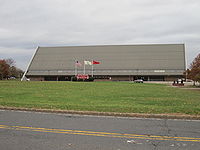
The RAC
I spent what felt like half my weekend at the major indoor athletic facility on the campus of Rutgers University in Piscataway, NJ. I attended 2 events, one each on Saturday and Sunday, both starting at noon. Plus I drove by it on my return home after eating lunch on Saturday. If I had bought tickets for the Saturday night performance by the Harlem Globetrotters, the masters of basketball showmanship, I might have been able to stay overnight and avoid another $10 parking fee.
I went to the Rutgers Athletic Center on Saturday for the men's basketball game versus the University of Minnesota Golden Gophers, a close contest but in the end, another loss for the struggling Scarlet Knights. Sunday brought the final home match for the 12th ranked Rutgers wrestling team, who won handily against an undermanned Northwestern University squad.
The crowd on Saturday was announced as 6,002. Sunday's attendance was 2,527. Capacity for the building is 8,000. There was more noise on Saturday because of the crowd size, the presence of the Rutgers Pep Band and a whole complement of cheerleaders and the Dance Team. The die hard wrestling fans made themselves known to the participants with their enthusiasm during the matches, but the atmosphere was decidedly in need of a smaller venue to look and feel better.
Undoubtedly, The RAC, like High Point Solutions Stadium a couple of minutes away, visually defines RU major sports. It is home of the flagship state university of New Jersey's wrestling and two basketball teams, who play in one of the most dominant athletic conferences in this country, the Big Ten.
In comparison with its companion, High Point Solutions Stadium is shiny, big and shows an earnest investment in the future of RU football. Football is the dominant sport at RU--it should be, given the fact that the first intercollegiate football game was held in New Brunswick in 1896, resulting in a Rutgers 6-4 victory over Princeton.
This November, The RAC, which is formally called the Louis Brown Athletic Center after a former Rutgers golf team member who made a sizeable bequest in his will, will be 40 years old. A mid-sized arena in the Eastern Eight, Atlantic 10 Conference, Big East Conference and the American Athletic Conference before Rutgers left each one, it now has the smallest capacity in the Big Ten. While its size is considered small, the former home for Rutgers basketball was the 3,200 seat College Avenue Gymnasium, which had seats on three sides, with the wall where the team benches were located dividing the court from the from the swimming pool.
So, when The RAC was ready, this was a big upgrade from Rutgers' previous winter sports home. The RAC was a beautiful place back in 1977--modern, gleaming. Featuring trapezoid sides at two ends, the building looks like a giant, truncated tent. Given its size, The RAC was not huge but still evidence of a meaningful arena. Upon entry, there was a concourse at the east end, which was also home to athletic offices above concession stands and the ticket office, which also had a row of windows outside for day-of-game sales. There were restrooms on both ends of the concourse. Standing centered on the concourse presented a clear view of the arena floor.
The seating area in 1977 and today consisted of folding chairs at the lower level, so that practice could be conducted on the entire floor; then permanent seating from the entry or 200 level; and then bleacher-like seats at the 300 level. At both ends of the basketball floor there are folding beachers--the west end being bigger to accommodate the student section. There were also areas on the floor for other teams to practice including netting for baseball. The dominant color is scarlet red, which is the main Rutgers color. An overhead scoreboard, fairly recently updated to have video on its four sides, hangs over center court. Since the roof is supported by four ples to the sides of the main stands, Rutgers wisely placed auxiliary scoreboards on them, which have been upgraded to full length, state of the art matrix boards. Pennants for the conference schools have been on the end of the arena over the student section; now they hang over the main stands, replacing banners for the post-season successes of the Scarlet Knights teams. There are bigger banners for the numbers of the players who have achieved All-America status as well as banners commemorating women's coaches Theresa Grentz and C. Vivian Stringer who have been enshrined into the Naismith Basketball Hall of Fame. Other banners of note are for former player and coach Eddie Jordan and for the teams who have made it to the National Championship level. At the east end, the American flag is suspended from the rafters, accompanied by the New Jersey and Rutgers flags.
Because of its unusual shape, the noise levels when the arena is filled to capacity make it one of the loudest and more intimidating places to play. The new sound system makes a loud and noticeable presence when recorded music is played. The Rutgers Pep Band is a predominantly brass group emanating from the student section, which helps to supercharge The RAC when there are time outs. Announcers and players have acknowledged that the fervor of the fans is a big factor in how games are won and lost.
Another tenant of The RAC was the NBA's New Jersey Nets, who played there from 1977-81 after relocating from Long Island, while awaiting completion of their arena in the New Jersey Meadowlands. There have been concerts, graduations and even a Professional Bowlers Association tour stop held inside of The RAC.
Parking has always been an issue. The lots are large, but they are shared with student vehicles. There are two directions to go in and out of the lots on parallel two lane roads, creating some large traffic tie ups when there is a big crowd.
Personally, I have gotten very used to The RAC. It has that homey kind of look to it. I like when it is filled, but with the teams in decline, that is not happening unless another Big Ten power is playing and has a strong local following. When Rutgers was in the Big East Conference, The RAC was nearly filled to the rafters if the University of Connecticut, Syracuse University or other national championship-caliber teams visited. With the good teams in the Atlantic 10, championship games versus Penn State and Massachusetts were wild affairs which the country viewed on ESPN.
Coach Steve Pikiell is trying to revive the semi-dormant Scarlet Knights following. That will take time. But one of his hindrances in recruiting top flight talent is The RAC itself. Compared to the other Big Ten arenas, The RAC looks like a freshly-painted, very large high school gym. For games at which attendance is not very big, the place looks not very pretty. Bryce Jordan Arena at Penn State is a much more beautiful and modern facility which can hold 15,000 fans when needed. And Penn State is , like Rutgers, a football school, and the teams are perennially second tier in the Big 10. The massive Beaver Stadium dominates the State College skyline. Yet abutting Beaver Stadium is the saucer-like roof of the basketball arena, clearly visible next to its gigantic kin.
That scene can be repeated at most every Big 10 school. Wisconsin and Ohio State play in newer, dual purpose buildings. Even Minnesota, Rutgers foe this past Saturday, plays in a musty old place dubbed The Barn, which is still larger than The RAC. With such attractions as large crowds and separate practice areas, Rutgers cannot presently compete evenly with other, more established basketball powers. The talent in New Jersey and the New York metro area is among the best in America. Unfortunately, they flee to places like the University of Kentucky with its 22,000 seat Rupp Arena and accumulation of nationally recognized players, or Duke University, whose noisy old arena, Cameron Indoor Stadium, outranks Rutgers academically and has the attraction of legendary coach Mike Krzyzewski. Tradition and facilities have trumped Rutgers repeatedly when competing for the homegrown players.
Just like in football, it will take an influx of New Jersey kids willing to stay home and play for RU. Once that starts to happen, then once more The RAC will be regularly filled and be intimidating as it was in the past. Then, When Rutgers has more of the revenue stream which the Big 10 will offer after 2021, long-standing plans to either increase The RAC capacity to a still smallish 12,500 or to build an entirely new arena, will be warranted.
For now, there is always hope. Every time I go to The RAC, I still enjoy the atmosphere. No matter how small a crowd. I long for the days of Rutgers basketball success and larger crowds becoming the standard, just like in the 1960's and 70's at the College Avenue Gym. Their high level of play packed the building and made The RAC possible. Winning teams in the 2010's-20's will reprise the fervor for the games and thereby demonstrate the need for a larger capacity, whether it be The RAC or a new site.
All of this overdue. The foundation is there. The architect is in place. The shortcomings of the Rutgers program can be outweighed by what Rutgers has to offer both athletically and academically. And the outdated RAC can be an advantage for the teams in close games. No matter how it pales in comparison with the other Big 10 schools.
Call me a dreamer. A realistic, pragmatic one. This is what I thought about when I spent my weekend at The RAC.

Monday, February 6, 2017
The State of the NFL
The National Football League is feeling pretty good about itself right now in the immediate afterglow of Super Bowl LI. A drama-filled game with the greatest comeback in Super Bowl history culminating with a masterful drive engineered by the New England Patriots and Tom Brady, the most hated team and player in the league (outside of New England). While the partisans of the Atlanta Falcons wonder what happened and team owner Arthur Blank seemed mortified while he watched from the sidelines in disbelief that he was not going to receive the Lombardi Trophy given to the winning team after trekking down from the joyous luxury box the owners sit in.
Commissioner Roger Goodell, who in an obviously rehearsed answer, had weathered the media storm from the New England media earlier in the week about his decision in Deflategate, the probe of under inflated game footballs which led to Brady's suspension of 4 games to start the season. So there he was, merrily shaking Tom's hand after the epic game, as if nothing had happened, then presenting the trophy to owner Robert Kraft while being soundly booed by the Pats fans. The first words out of Kraft's mouth were a vilification of Goodell by a powerful force withing the League's cabal of millionaires for the Commissioner's seemingly unfair role in protecting the integrity of the game. It was great theater, if not somewhat awkwardly absurd. Those who wanted to see how the scene would play itself out were not at all disappointed.
The NFL triumphantly struck gold (again) in Houston in 2017. More than 100 million people in the United States viewed the game on FOX. The halftime show, starring the incredibly talented Lady Gaga, symbolically opened the second act of this game when the roof on NRG Stadium was parted exclusively for her widely-anticipated extravaganza. While enriching the Harris County economy with this game, the advertisers and networks made a bundle for their coffers, too. Nationally, food emporiums--from sub and pizza shops to restaurants and markets--thrive on this day. Then there is the ton of legal (in Nevada anyway) and illegal betting (in the form of pools at parties and in offices). Not to mention, most of all, the windfall that the NFL itself garners as part of this American ritual.
From its humble roots in the Los Angeles Coliseum, the ancient temporary Olympic home for the transplanted Los Angeles (nee St. Louis) Rams, where the first Super Bowl was held before a sizable but certainly not sold out venue, the NFL has tirelessly marketed themselves into the multi-billion dollar institution through the celebration of its championship as a national holiday. The other 30 owners of franchises in various cities joined the league for exactly this--to make even more money in a closed corporation akin to a country club for rich people where football, not golf or tennis, is played for high returns.
Make no mistake--from its tax-exempt status to its tie ins with the United Way to its licensing agreements which are rigidly enforced--the NFL is a capitalist's dream. Captained by Goodell as the highly-compensated corporate head, the sixth commissioner of the league since its inception, the motives of the NFL are singular in its pursuits--to make money while promoting itself to the rabid fan base and, on Super Bowl Sunday, the more casual observer. Very few people do not know who Tom Brady, or for that matter his supermodel wife, or that he allegedly conspired to deflate footballs and received punishment outside of a courtroom for his dastardly deeds. That was ongoing, voyeuristic national news.
No, this is a corporate giant immune to anti-trust laws because of its legal status and the need for cities and states to ingratiate themselves to the league in the form of subsidies for stadiums with luxury suites and low rents, thus allowing the teams to further profit, while burdening the populace with the cost of building these monuments and the transportation infrastructure needed to move 70-80,000 people on game day. Sure, there are jobs that are related to the day of the game and the teams, but overall, the profits enriching tax coffers pale in comparison to those generated by the NFL teams.
I do not blame the owners of any sports team in any league for trying to make as much money as they can. The NFL epitomizes this aspect in all its glory. It is first and foremost a business.
But with all the merchandising money and the immortalizing its great players for their efforts as demonstrated by the announcement of 7 new members of the Pro Football Hall of Fame on Saturday night (including Jerry Jones, the bombastic owner of the richest franchise in professional sports, the Dallas Cowboys), plus the constant media presence on its own network and ESPN, to being the lead story on all broadcasts last night, the NFL faces serious problems in the near future.
Football is a violent sport. Seemingly the masses of this country are in love with violence. Look at the multitude of commercials for the Super Bowl that touted violent behavior. Or the FOX merchandised transformer man who was a metaphor for the powerful nature of the sport. This is a nation which has glorified Mixed Martial Arts and persona like Rhonda Rousey, who pummel each other into submission with devastating kicks and utilizing gloves that even boxing does not use. People go to NASCAR for the crashes, not necessarily the thrill of the race. Hockey fights are still cheered vociferously.
Nowhere is aggressive physical contact with the disregard of safety more evident that in football. And nowhere is it more aggressive than in the NFL. The artistry of throwing and catching a football is offset by the combativeness of running and being tackled or fighting an opponent for a pass. These are big, strong men in protective gear trying to knock each other out of the game through collision after collision.
It takes a rough mentality of a person who understands and accepts these conditions, in this case, for significant pay. Which is why the sport is so beset with domestic violence--the psychology of such actions are a direct correlation to the nature of the game. We look at Ray Rice, Adrian Peterson and Josh Brown, the kicker for the New York Giants--all with varying degrees of unfathomable behavior. Moreover, how many players or former players have been murdered or been involved with a murder---former Patriots tight end Aaron Hernandez comes to mind here, as does the iconic O.J. Simpson.
It is hard to say if this is a microcosm of society as a whole. While race may be pointed to as a factor, it is a nullity, for the vast majority of fans are white and they riot and act out at political rallies in unacceptable ways. Again, I point out the vast number of science-fiction action commercials during the game.
The NFL reacts to this, as they do with every violent or drug-related action-after the fact as a sort of self-policing, above the law unit. On the field offenses are penalized and can come with suspensions and fines also being imposed. The New Orleans Saints had a system in place a couple of years ago whereby defensive players were rewarded for violent hits. The head coach was suspended as well as the defensive coordinator, but both are still employed in the NFL. Yet Ray Rice became the poster boy for domestic abuse throughout the NFL--a pariah who still should be playing football despite having atoned and made the necessary amends to society for his actions.
It is a flawed system which desperately needs to be revamped, except it never will be. With the money that pro football accesses, coupled with the public's requirement for head bashing, even with the concussion protocol in place--with rules that have been enforced and selectively overlooked in a venue which fought clinical studies about the nature of head trauma in the sport notwithstanding the overwhelming numbers of former players who have died prematurely as a result of dementia from their head injuries.
Let the NFL run a campaign for showing us how tackling at Dartmouth College is so much more refined at less likely to cause injury--I surely did not see that on display by either sides defenders. Let them show us how artificial fields are better constructed and safer--except when behemoths are involved. Legs and joints can only withstand so much torsion. Rhetorically--how many cripples are there among the NFL alumni? No contest here--the game is what it is--a violent sport which almost was paradoxically disbanded in the early 20th century because it once was too ferociously played.
This aspect is obviously accepted by so many people given the popularity of the sport. The rush to build new temples to worship these players beating up on each other is at a crossroads. Three venerable franchises have sought to relocate because they could not reach agreements with state and local politicians or in the case of San Diego win a 60% majority on a referendum for a new edifice. The fans in St. Louis--who willingly accepted the Cardinals from Chicago before they abandoned the city for greener pastures in the desert of Arizona, only to accept the Rams when they fled Los Angeles/Anaheim because Southern Californians didn't flock to their home games--cried foul when the Rams owner took off for his own self-financed complex in Inglewood and his team became the Los Angeles Rams reincarnated.
San Diego's team, the Chargers, is "reluctantly" leaving to share the Rams fine new building when it is ready as a co-tenant because the citizens of San Diego did not wish to underwrite billionaires. Oakland and the Raiders, a team who split from Oakland for L.A. only to return to Oakland with a renovated building which now they can no longer find any comfort (luxury suites and amenities), is now seeking to land in the comfort of Las Vegas, seduced by a new stadium financed in part by billionaire gambling magnate Sheldon Adelson, Clark County and the State of Nevada. Except that underwriter, Goldman Sachs, a dubious financial institution itself, is no longer interested in the venture, nor is Adelson. Nor was the ever virtuous NFL seeking gambler involvement from the likes of the politically-involved activist and casino owner. Which leaves the Oakland franchise in a quandary, even though, in an odd ironic twist, the San Diego mayor would welcome the Raiders to the Chargers old stadium and then see what develops.
Plus the NFL still maintains a global interest, with ideas of playing more games in Mexico and England, taking some of the weaker franchises in terms of attendance and plunking them in a foreign country to enhance the NFL's marketability. Ergo, more games are available nationally through Thursday Night Football, so that games are seen all day Sunday, Monday night and Thursday night along with Saturdays once the college football season has morphed into bowl games. Then there is live streaming which involves Google, You Tube, Twitter and Facebook. The games can be seen virtually everywhere.
While the NFL seems to be in good shape, there are numerous cracks in its foundation. Right now there is peace with the NFL Players Association. At some juncture the NFLPA will be seeking a greater piece of the revenue pie, which could lead to a strike, something that dreadfully hurt the NFL previously in the eyes of the public.
No, the NFL is not breaking apart like the Humpty Dumpty commercial for TurboTax. They have not fallen off the wall of their own doing. Nonetheless, the stressors are there and the fault lines could become more pronounced.
Until then, the National Football League will chug along its merry, money-making way. With all the turmoil and chaos surrounding the product itself, the honchos at the NFL still find a way to put on a game for the ages.
I am certain that the vast majority of people were not talking about anything else but Super Bowl LI in some form on the day after the game. Therein lies the state of the National Football League circa 2017.
Subscribe to:
Posts (Atom)